Drone Roof Inspection
Landlord Roof Inspection
Scheduled inspections across a portfolio or a block, with no scaffold outside a let property and no weeks of notice for a tenant.
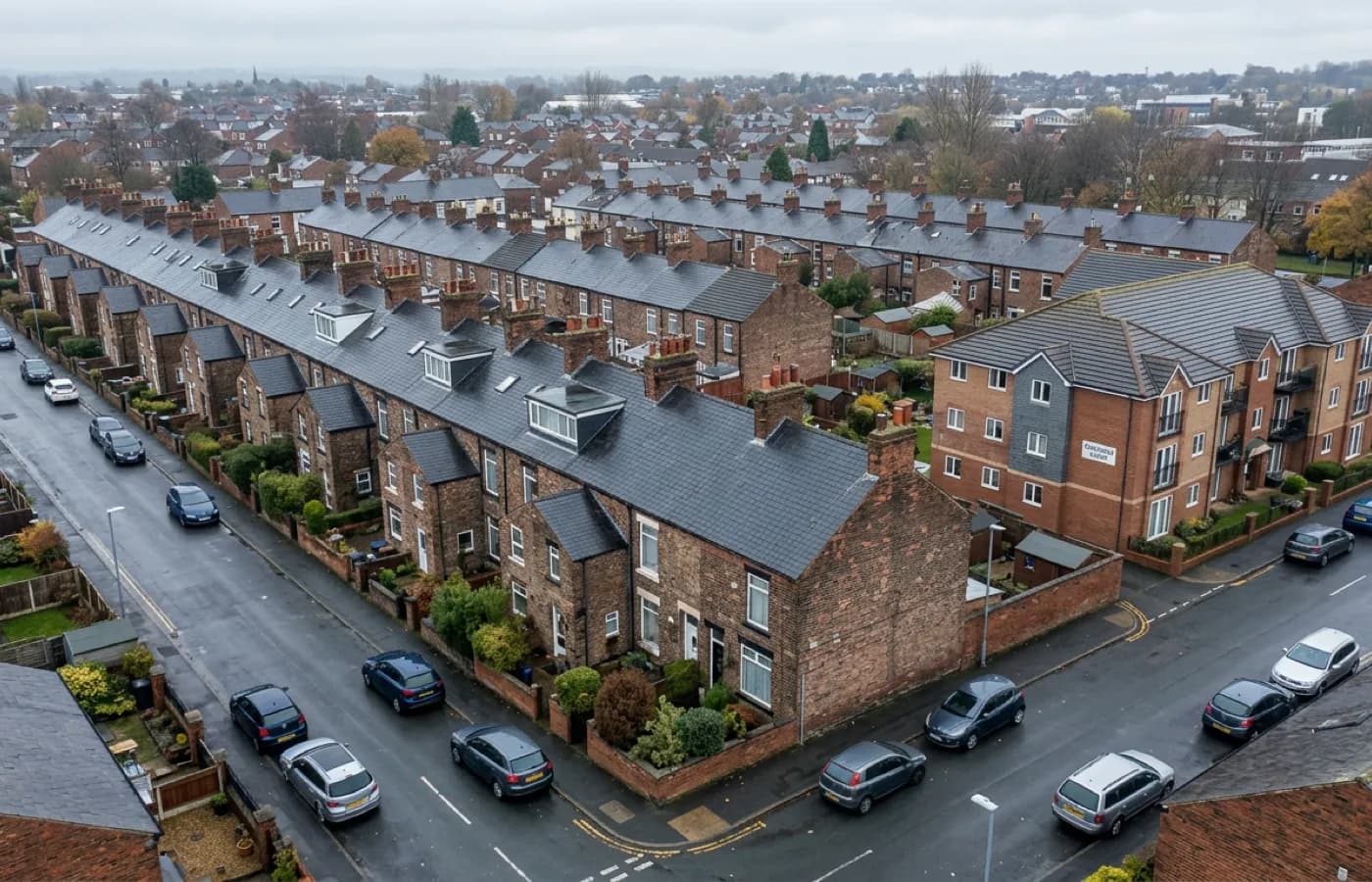
For a landlord or a managing agent, the roof itself is rarely the expensive part. The expensive part is what a physical inspection costs around it: the access notice a tenant is legally owed before scaffolding goes up, the days the pavement or driveway is blocked, the rent day nobody wants disrupted while a tower is standing outside the front door.
A drone inspection removes most of that cost before it starts. There is no structure to erect, no multi-day notice period built around erecting and dismantling it, and no equipment sitting on a shared driveway or outside a neighbouring property for a week.
The result is a roof condition record that costs a fraction of the disruption a physical access job carries, which makes it realistic to check a roof on a schedule rather than only when a tenant reports water coming through a ceiling.
What is included
- One inspection report per address, not one report for a batch
- Communal roofs, parapet gutters, flat sections and rooflights covered
- No scaffold notice period and no equipment left on site between visits
- A record a freeholder, committee or leaseholder can be shown directly
- Insurance certificate supplied up front for a compliance file
- Multiple nearby addresses covered in a single visit where practical
Why access cost is the real barrier to checking roofs regularly
Most portfolios do not get roofs checked on a schedule, they get them checked when something has already gone wrong. The reason is rarely indifference, it is that a physical inspection round on a dozen properties means a dozen sets of access arrangements, a dozen notice periods, and a dozen lots of scaffold cost before anyone has confirmed anything needs doing.
Removing the access cost changes that calculation. A round of inspections that would have needed weeks of notice and a scaffold budget per property can be flown in a fraction of the time, at a fraction of the disruption, which is what actually makes a yearly or twice-yearly schedule realistic rather than aspirational.
Communal roofs and the notice problem specifically
Blocks and shared buildings have their own version of the access problem: a scaffold or tower on a communal roof affects every flat underneath it, not just the one with the reported issue, and the notice and disruption has to be managed across every leaseholder or tenant rather than one household.
A drone inspection of a parapet gutter, a flat roof membrane or a rooflight seal reaches the same detail without any of that coordination. The photographs are also useful beyond the inspection itself: a picture of a silted parapet gutter tends to end a disagreement about whether a service charge is being spent on the right thing faster than a description of one does.
On the day
How a landlord and agent runs
- Step 1
Send the address list
Access and airspace are checked for each address before a date is set, and anything unusual about a site (a shared driveway, a restricted street, a tenant who needs specific notice) gets flagged early rather than discovered on the day.
- Step 2
Notify tenants, if needed
Because nothing goes up against the building, notice requirements are far lighter than for scaffold access. A short note explaining a drone will be used near the property is usually enough, and a template is provided.
- Step 3
Fly the round
Each address gets the same standard of coverage, captured the same way each time, so next year's inspection can be compared directly against this one rather than argued about from memory.
- Step 4
Reports out
One report per address within 48 hours, plus a short summary flagging which properties need attention first if several were covered in the same round.
Behind the work
Kit, cover and qualifications
Nothing put up against the house
No scaffold tower, no ladder against the gutter, no base plate on the drive. The aircraft holds a standoff distance from the building for the whole inspection.
CAA registered
Operator ID and Flyer ID held, plus the A2 Certificate of Competency, which is what allows the closer operation near buildings and streets that makes this work in a terrace or a town centre.
100 megapixel camera
A DJI Mavic 4 Pro with a Hasselblad camera and 6K video. The resolution is what lets the aircraft stay at a safe distance and still return detail close to what a person standing on the roof would see.
Insured with Coverdrone
Full commercial cover for the operation. Certificates go to managing agents, block committees and insurers as a matter of course, without anyone having to chase for them.
Landlord and agent
Landlord Roof Inspection questions
- Do tenants need much notice for this, compared to a scaffold visit?
- Considerably less. Because nothing is erected against the building and the visit is typically under an hour, the notice that matters is a short heads up rather than the multi-day scaffold access notice a physical inspection usually requires. A template note is provided.
- Can several addresses be covered in one day?
- Yes, where they are close together, and that is usually the point for a portfolio. Send the list and a realistic number for the day comes back once distances and roof sizes are known.
- Will this work for a shared driveway or a tight parking court?
- That is one of the more common reasons agents choose this over a scaffold visit. A tower or a lorry needing a shared driveway or a parking court for several days is often the actual blocker to getting a roof looked at, and the aircraft does not need that space at all.
Where
Landlord Roof Inspection across the South West
Also on this site
See how it works
Book an inspection with Drone Roof Inspection
Tell us the address and what you need looking at. Sam Hembury will come back with a fixed price and the next available slot.